LEVEL MEASUREMENT TECHNOLOGIES
Hydrostatic level transmitters: level from the pressure of the liquid
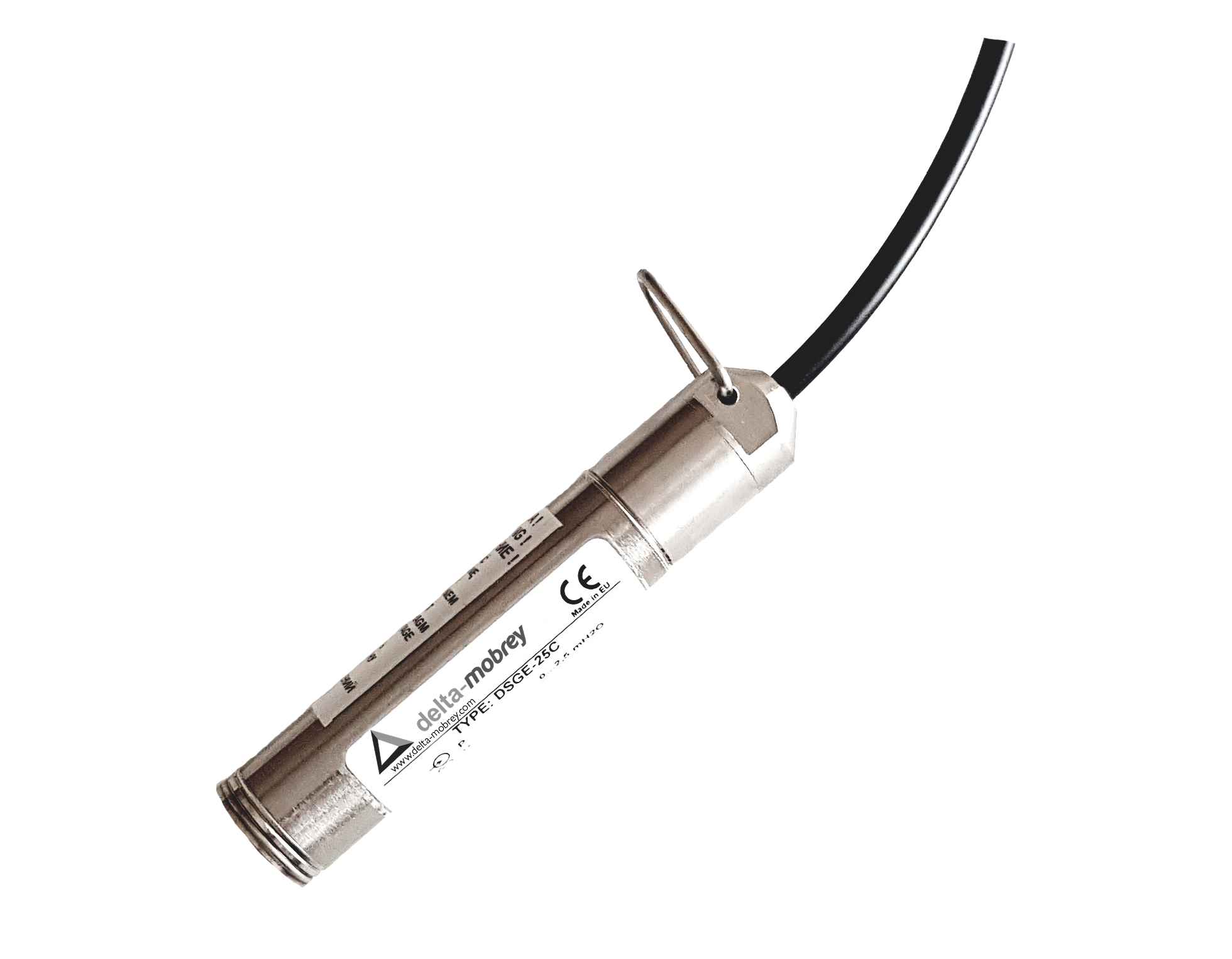
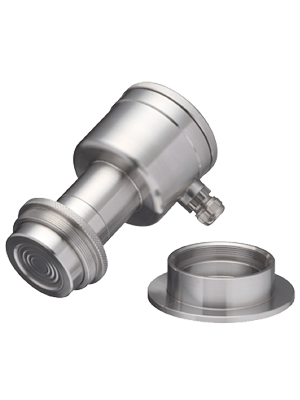
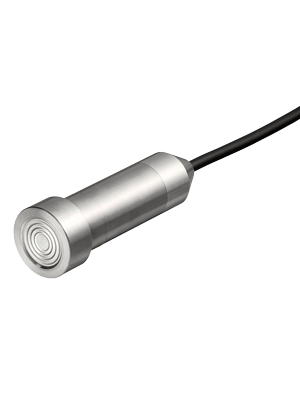
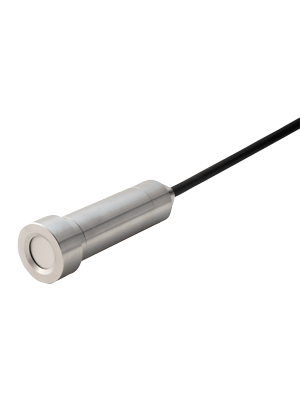
A hydrostatic level transmitter measures the pressure at the bottom of a tank or well and turns it into level — the simplest continuous level measurement for liquids, and a natural fit for water and wastewater. It works under foam, vapour and anything above the surface, as long as the density of the liquid is known. Our catalogue includes the Klay Hydrobar, AquaCer and HydroCer families, the hygienic 8000-SAN, and the Delta Mobrey DSGE probes.
How a hydrostatic level transmitter works
A liquid presses on the bottom of its tank with a pressure equal to its height times its density times gravity. A pressure sensor at the bottom therefore measures the height — about 98 mbar for every metre of water. The transmitter turns that pressure into a 4–20 mA signal, often with HART.
The reference matters. The sensor must measure the liquid only, not the weather: submersible probes have a vent tube inside their cable, which brings the atmospheric pressure to the back of the sensor. The Delta Mobrey DSGE, for example, measures through an integral capillary line and gives a 4–20 mA signal referenced to the atmosphere.
Inside, a diaphragm passes the pressure to a measuring cell. The Klay AquaCer, AquaCer-I, HydroCer and HydroCer-I use a capacitive ceramic pressure cell, and the DSGE an immersed ceramic sensor. Here "capacitive" only describes how the cell reads the pressure: it is a hydrostatic pressure cell with ranges in bar, not a capacitive level switch. The Hydrobar series and the 8000-SAN have stainless steel diaphragms, with Hastelloy C, tantalum or gold-plated options depending on the model.
Accuracy is stated as a percentage of the adjusted span: 0.2 % on the Hydrobar, AquaCer, HydroCer and 8000-SAN, 0.1 % on the microprocessor versions Hydrobar-I, Hydrobar-S, AquaCer-I and HydroCer-I. On a 0–5 m range of water, 0.1 % is about ±5 mm.
- The weight of the liquid column, pressing on the diaphragm of the sensor
- The measuring cell, which turns the pressure into an electrical signal
- The vent tube in the cable, which brings the atmospheric pressure as the reference
- The 4–20 mA loop to the display and the control system
- The signal rises in a straight line with the height of the liquid
Where a hydrostatic level transmitter fits — and where it does not
A strong choice for
- Water and wastewater: wells, boreholes, sumps, reservoirs and open tanks
- Liquids with foam, vapour or condensation above them — the sensor sits below the surface
- Tanks with agitators, ladders or other internals that would disturb a beam from above
- Hygienic tanks, with a flush diaphragm on a hygienic connection, such as the 8000-SAN
- Hazardous areas and ships: the Hydrobar carries ATEX and IECEx Ex ia and major marine approvals
Think twice when
- The tank is closed and under pressure or vacuum: the gas pressure adds to the reading — measure the difference instead
- The density of the liquid changes, with mixing, batches or temperature: the level reading changes with it
- The medium is a powder or granules: there is no liquid column to weigh
- Heavy sludge or sediment would bury a probe at the bottom
How it compares with the other technologies
- Hydrostatic level transmitters (the technology of this article)−20…+100 °C
- Radar level−40…+200 °C
- Ultrasonic level−40…+80 °C
- Vibrating level switches−40…+120 °C
- Floats and displacers−60…+320 °C
- Conductive and HF level switches−30…+150 °C
- Rotating paddle−20…+80 °C
Typical process temperatures, not a model commitment; several technologies have versions for higher temperatures. We confirm the figures of each instrument for your application.
Installing a hydrostatic level transmitter
Mount the sensor at, or just below, the lowest level you need to measure: the transmitter measures the liquid above its diaphragm, not below it. Keep the end of the vent tube of a submersible cable open to the atmosphere and dry, in a junction box or the electronics housing.
Then:
- Choose a range so that the full tank sits near the top of it, with a margin for overfill.
- In a turbulent well or sump, a stilling tube keeps the probe still and away from the pump inlet.
- Enter the density of the liquid when you set up the range: the level is the pressure divided by density and gravity.
- Protect the cable from damage, and keep the vent tube from filling with water or condensate.
Hydrostatic level transmitters by industry
Hydrostatic level transmitters in our catalogue
The hydrostatic level transmitters and probes in our catalogue, each with its own page and technical data.
Hydrostatic level transmitters: frequently asked questions
Ask about a hydrostatic level transmitter
Tell us the liquid and its density, the tank or well and its depth, the process temperature, the mounting and the output you need — and our engineers will suggest the right transmitter, with price and delivery time.