PRESSURE MEASUREMENT TECHNOLOGIES
Pressure switches: mechanical and electronic, for alarms and shutdown
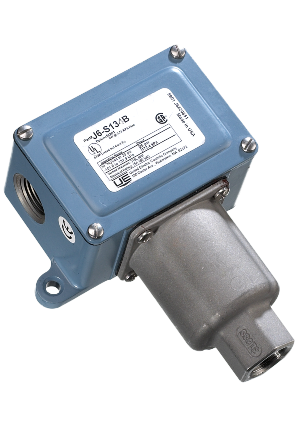
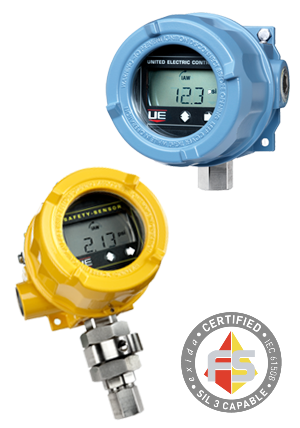
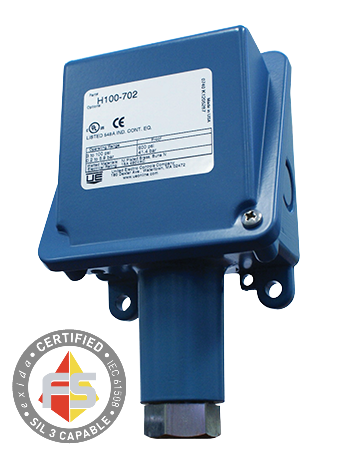
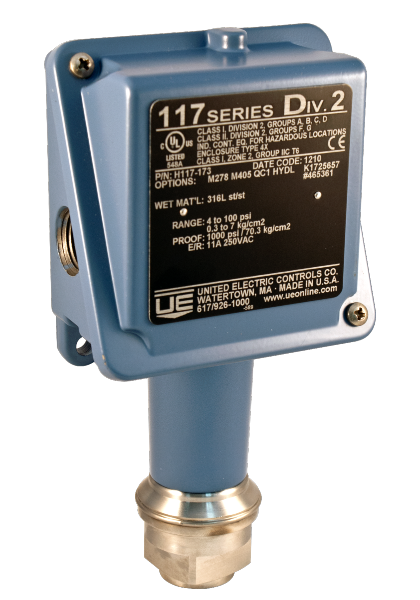
A pressure switch opens or closes an electrical contact when the pressure passes a set point — the simplest and most independent way to protect pumps, compressors, hydraulic systems and process lines from too high or too low a pressure. Our catalogue includes the United Electric Controls 10, J6, J40, 24 Delta-Pro and J21K series, the pressure and temperature switches of the 100, 117, 12, 120, 400 and 54 series, the electronic Excela and One Series, and the Delta Mobrey 301 differential pressure switch.
How a pressure switch works
In a mechanical switch the pressure acts on a sensing element — a diaphragm, a bellows, a piston or a disc — against an adjustable spring. When the force of the pressure overcomes the spring, at the set point, the element moves and flips a snap-action contact. The J40 uses a sealed metal bellows, the 12 Series a snap-acting Belleville disc that resists vibration, and the Delta Mobrey 301 a stainless steel diaphragm with a low-friction mechanism. No power is needed to sense the pressure.
The contact changes at the set point when the pressure rises, but it does not return as soon as the pressure drops back below it: it waits until the pressure has fallen a little further, to the reset point. The gap between the two is the deadband, and it stops the contact from chattering when the pressure hovers around the set point.
A differential pressure switch has two ports and acts on the difference between them — across a filter, a pump or a heat exchanger. The 24 Delta-Pro and J21K series are differential switches, and the Delta Mobrey 301 offers set points from −12.5 mbar to 15 bar at working pressures up to 110 bar, with set-point repeatability better than 1%.
An electronic switch measures the pressure and switches an output at set points you program. The United Electric One Series combines a switch, a transmitter and a local display in one instrument on a single process connection; the Excela is an electronic switch designed to install with existing wiring. For safety duty, look for hermetically sealed contacts — the 117 and 12 Series use them, the 12 Series to ANSI/ISA 12.27.01 — and for SIL 2 certification, which the 12 Series carries.
- The pressure, rising and then falling over time
- The set point (solid line), the reset point (dashed) and the deadband between them
- The contact: it changes at the set point on the way up and returns only below the reset point
Where a pressure switch fits — and where it does not
A strong choice for
- High and low pressure alarms and trips on pumps, compressors, hydraulic systems and lubricating oil
- Emergency shutdown and safety instrumented systems — the 12 Series carries SIL 2 certification
- Protection that must not depend on the control system: the 117 Series switches independently of it, with no exposure to communication faults
- Filter, strainer and pump monitoring with a differential switch, such as the 24 Delta-Pro, the J21K or the Delta Mobrey 301
- Hazardous areas, with explosion-proof versions such as the 120 Series and the flameproof Delta Mobrey 301
- Harsh and sour service: the 12 Series in 316 stainless steel with NACE MR0175 options, the 301 with NACE compatibility
Think twice when
- You need to see, record or trend the pressure: a switch only says above or below the set point — use a transmitter
- You need continuous control, such as a variable-speed pump holding a pressure: that needs a measured value
- The pressure pulsates strongly and continuously, and the switch is not protected by a snubber
- You need a very narrow deadband or several set points: an electronic switch, or a transmitter with alarms, does it better
How it compares with the other technologies
- Pressure transmitters25 mbar…2000 bar
- Differential pressure transmitters10 mbar…70 bar *
- Pressure switches (the technology of this article)10 mbar…400 bar
- Pressure gauges10 mbar…4000 bar
Typical ranges, not a model commitment, on a logarithmic scale. For differential pressure transmitters (*), the range is that of the difference; the static pressure of the line can be much higher. We confirm the figures of each instrument for your application.
Installing a pressure switch
Mount the switch where it sees the pressure it is meant to protect, with an isolation valve, so that it can be tested and replaced without stopping the process. A switch in safety duty also needs a way to apply a test pressure.
Then:
- Choose the range so that the set point sits in the middle part of it, not at the very end.
- Set the deadband wide enough to avoid chattering, but narrow enough that the alarm clears when the cause is gone.
- Test the switch at commissioning and at regular intervals, especially in safety duty.
- Use the contact rating, enclosure and certification that the circuit and the area call for.
Pressure switches by industry
Pressure switches in our catalogue
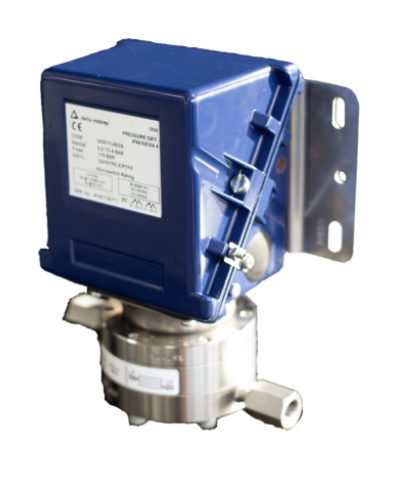
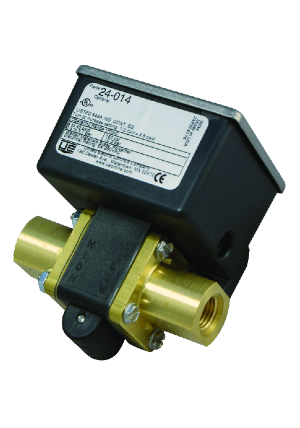
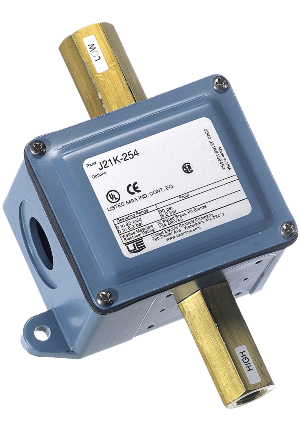
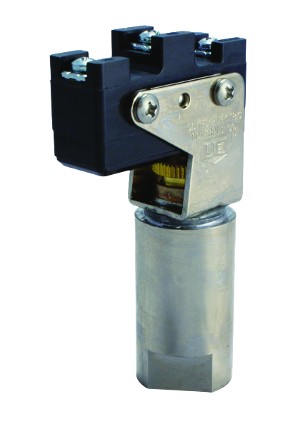
The pressure switches in our catalogue, each with its own page and technical data.
Pressure switches: frequently asked questions
Ask about a pressure switch
Tell us the medium, the set point and the pressure range (or the differential), the duty (alarm, trip or control), the contact you need, the process connection and the area classification — and our engineers will suggest the right switch, with price and delivery time.