FLOW MEASUREMENT TECHNOLOGIES
Coriolis flowmeters: measuring mass flow directly
A Coriolis flowmeter measures the mass of the fluid passing through it, not its volume, and the same instrument measures density and temperature too. That makes it the first choice for custody transfer, batching and dosing, and for liquids whose density or viscosity keeps changing.
How a Coriolis flowmeter works
Inside the meter, the fluid passes through one or two measuring tubes. A drive coil keeps the tubes vibrating at their natural frequency, much like a tuning fork.
With no flow, both halves of the tube move in step. Once the fluid flows, the Coriolis force resists the motion: the inlet half of the tube lags, the outlet half leads, and the tube twists slightly. Two pick-off sensors, one near the inlet and one near the outlet, see the twist as a time difference between their signals. That time difference is proportional to the mass flow rate.
The same vibration gives a second measurement. The more mass the tube holds, the lower its natural frequency, so the meter works out the density of the fluid from it. A temperature sensor on the tubes corrects for the way their stiffness changes with temperature. Volume flow then follows simply: mass flow divided by density.
Because the meter weighs the flow instead of inferring it from velocity, the reading does not depend on the flow profile, and in most applications changes in pressure, temperature or viscosity need no separate compensation.
- The fluid passing through the measuring tube
- Drive coil: keeps the tube vibrating at its natural frequency
- Inlet and outlet pick-off sensors
- The twist caused by the Coriolis force when fluid flows (exaggerated)
- The signals of the two sensors: the time difference Δt between them is proportional to mass flow
- Temperature sensor: corrects for the change in tube stiffness
Where a Coriolis flowmeter fits — and where it does not
A strong choice for
- Custody transfer and batching, where the product is invoiced or dosed in kilograms or tonnes
- Liquids whose density or viscosity changes: oils, fuels, syrups, resins, chemicals
- Liquids that do not conduct electricity, where an electromagnetic flowmeter cannot work
- Density and concentration in the same instrument, for example the sugar content of a syrup
- Small flows and precise dosing
- Installations with no room for straight pipe before or after the meter
Think twice when
- The line is large: size, weight and cost climb steeply with diameter. Our catalogue goes up to DN 400, but for water in large pipes an electromagnetic or ultrasonic flowmeter is usually the more economical choice
- You are measuring gas at low pressure: its low density gives a weak signal and a high pressure drop through the tubes
- Little pressure drop is available, especially with viscous liquids
- The liquid carries a lot of entrained gas or may flash inside the meter — unless the meter is specified for it
- You are measuring steam: other technologies, such as vortex, are the usual choice there
How it compares with the other technologies
- Coriolis (the technology of this article)±0.1–0.2%
- Electromagnetic±0.2–0.5%
- Ultrasonic±0.5–2%
- Differential pressure±0.5–2%
- Variable area±1.6–4% *
- Vortex±0.75–2%
- Thermal mass±1–3%
- Positive displacement±0.2–0.5%
- Turbine±0.5–1%
Typical ranges for liquids (thermal mass: gases), ± % of the reading; for variable area, the accuracy class (*). The accuracy of a specific instrument depends on the model, the size and the installation — we confirm it for your application.
Installing a Coriolis flowmeter
A Coriolis flowmeter needs no straight pipe before or after it: the measurement does not depend on the flow profile, so a bend or a valve right next to the flange does not affect the reading. The OPTIMASS 5400, for example, is specified with 0 D upstream and 0 D downstream.
What it does need is measuring tubes that stay full of liquid — or, in gas service, free of liquid. Orientation is chosen with that in mind:
- Avoid the highest point of the line, where gas collects, and a vertical line with downward flow, which may not stay full.
- Fit control valves after the meter, so that the tubes stay under pressure and the liquid does not flash inside them.
- Support the pipe on both sides of the meter; the meter should not carry the weight of the pipe or take up its thermal expansion.
- Fit an isolating valve after the meter (ideally one before it as well), so that the zero point can be set with full tubes, no flow and at process conditions.
Coriolis flowmeters by industry
Coriolis flowmeters we supply
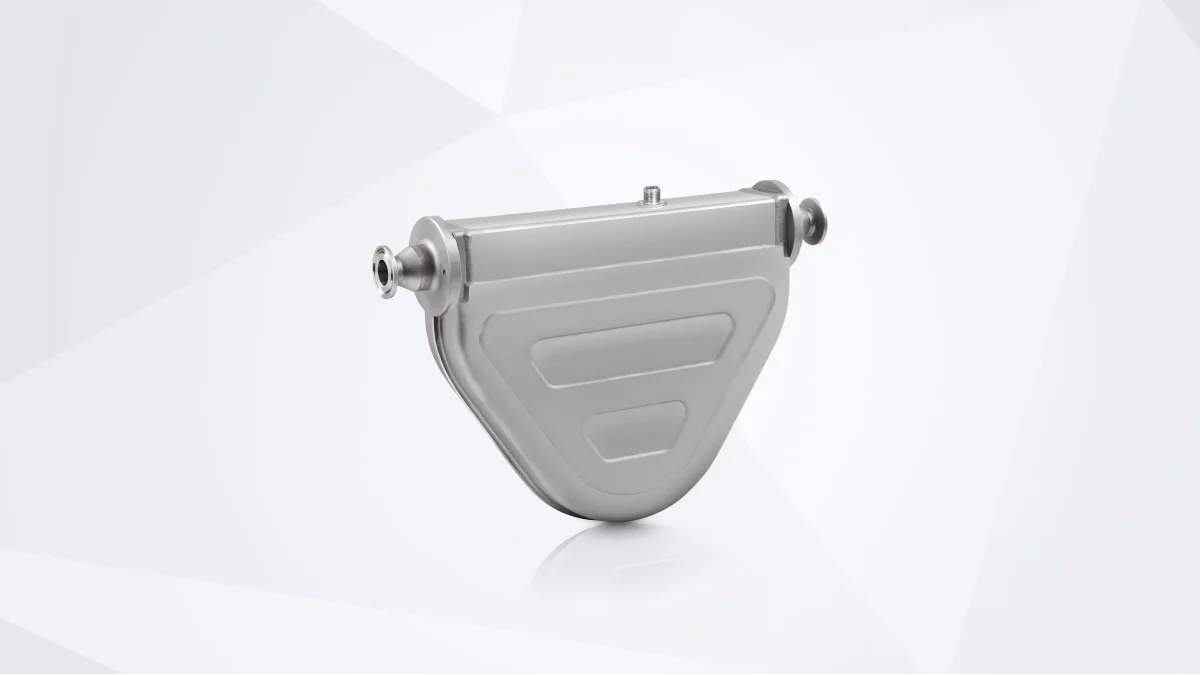
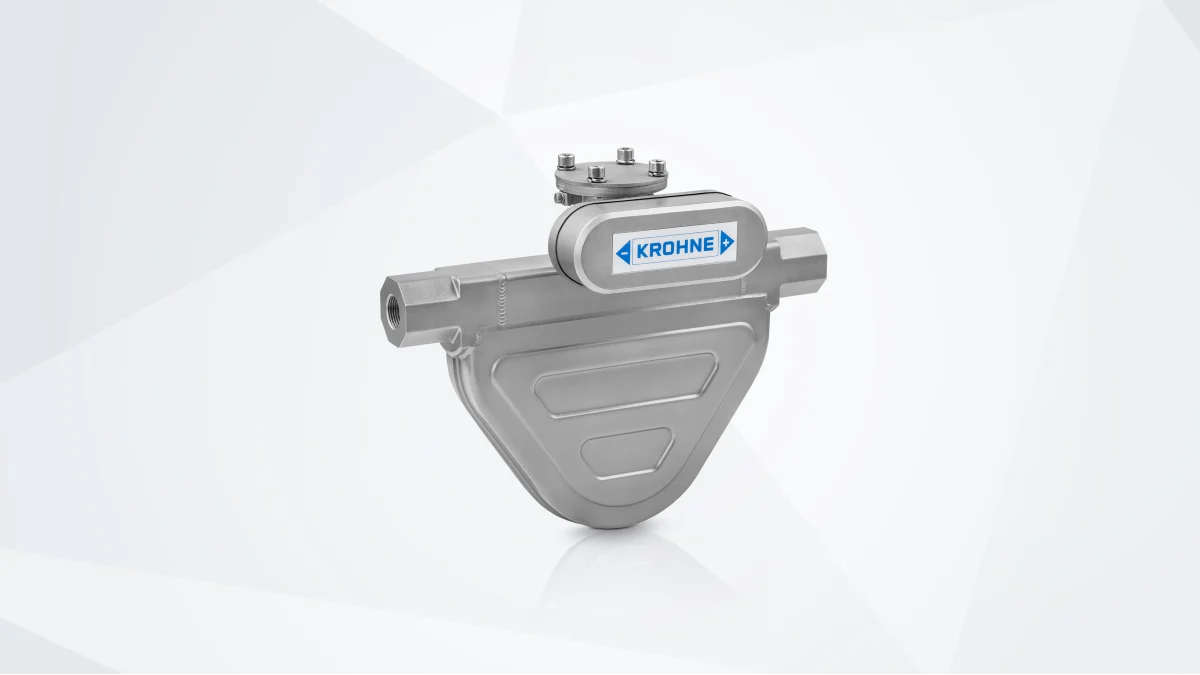
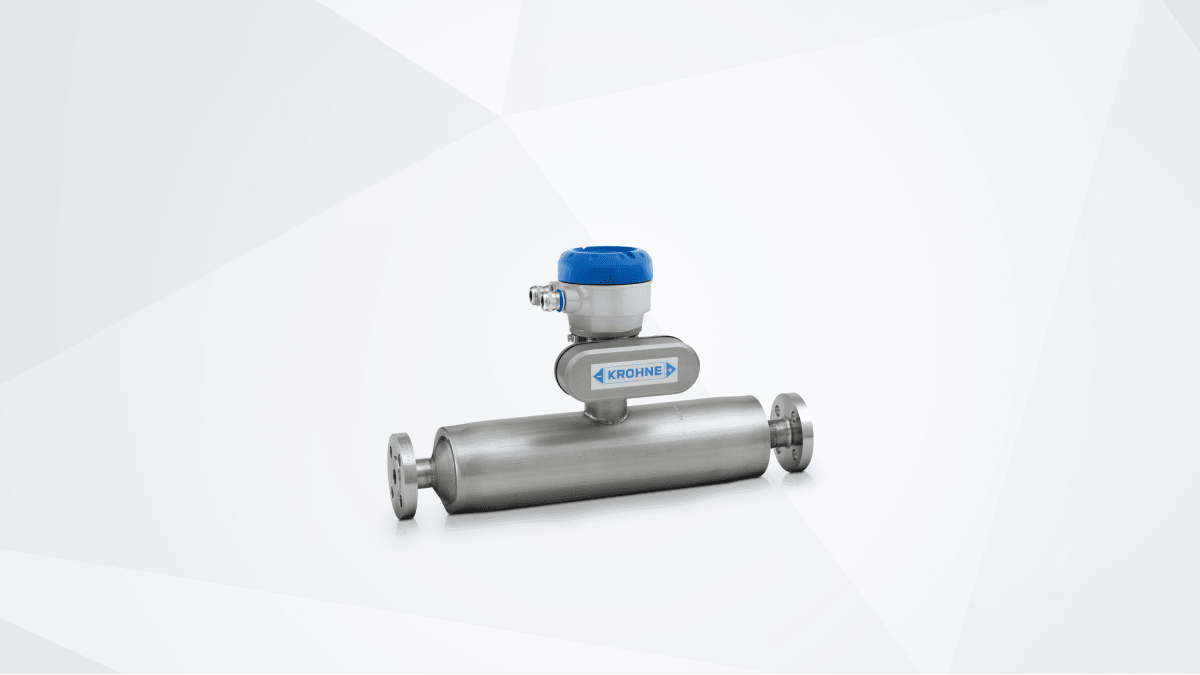
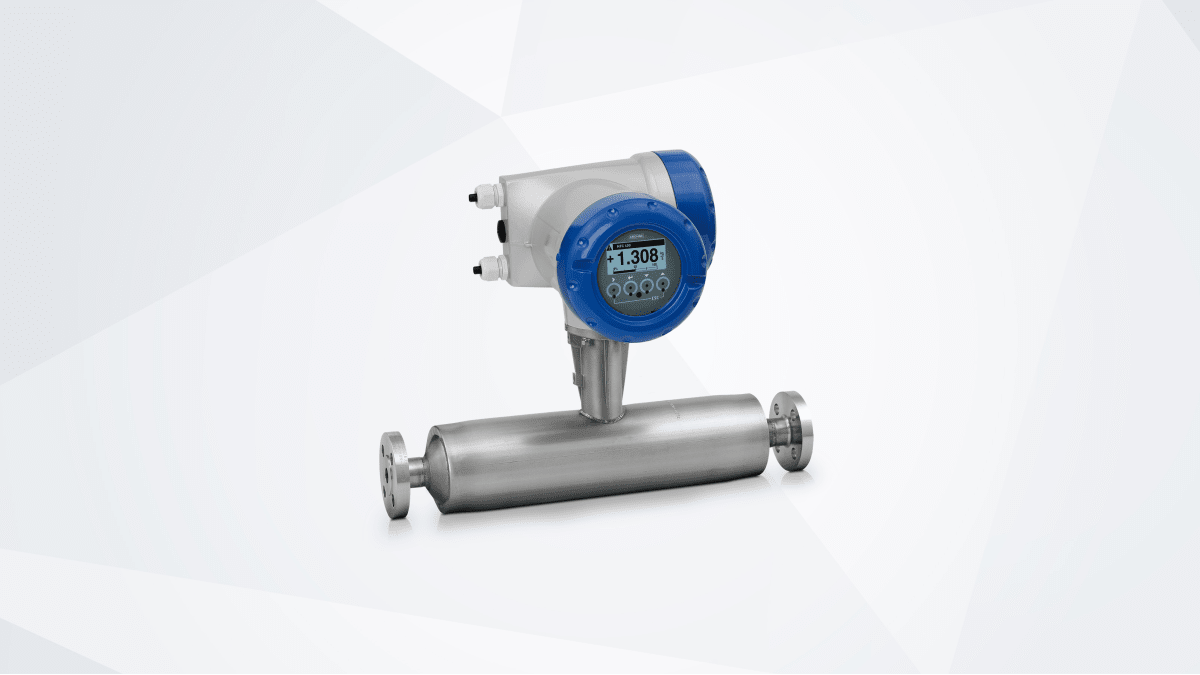
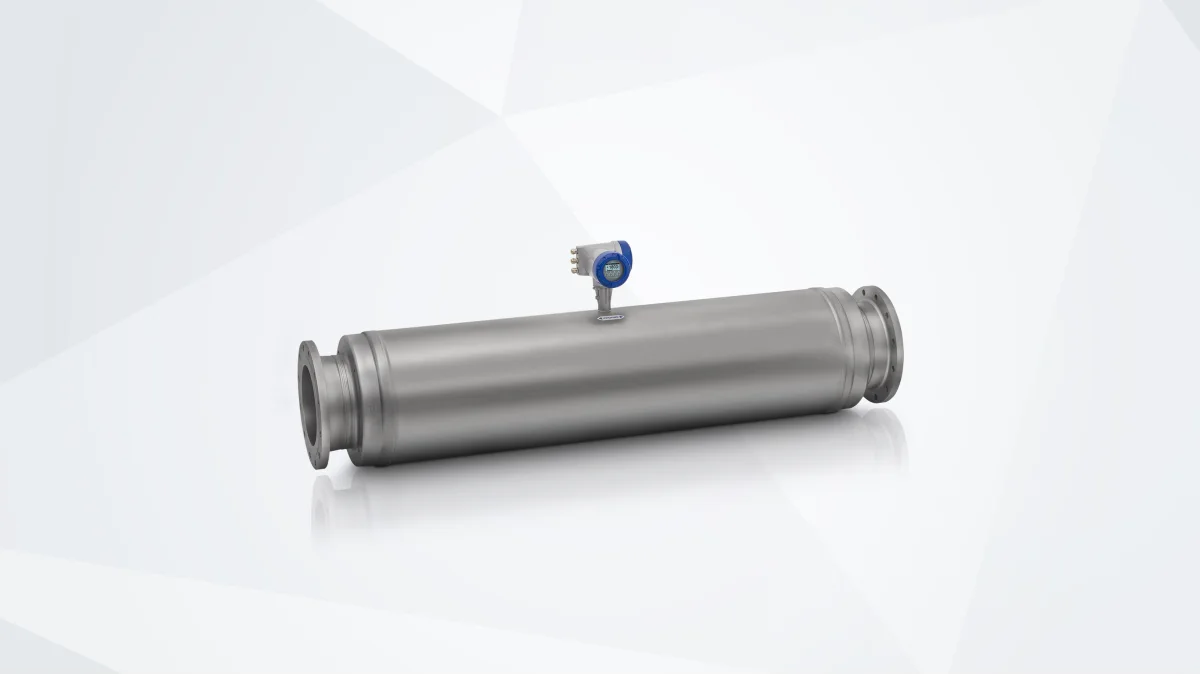
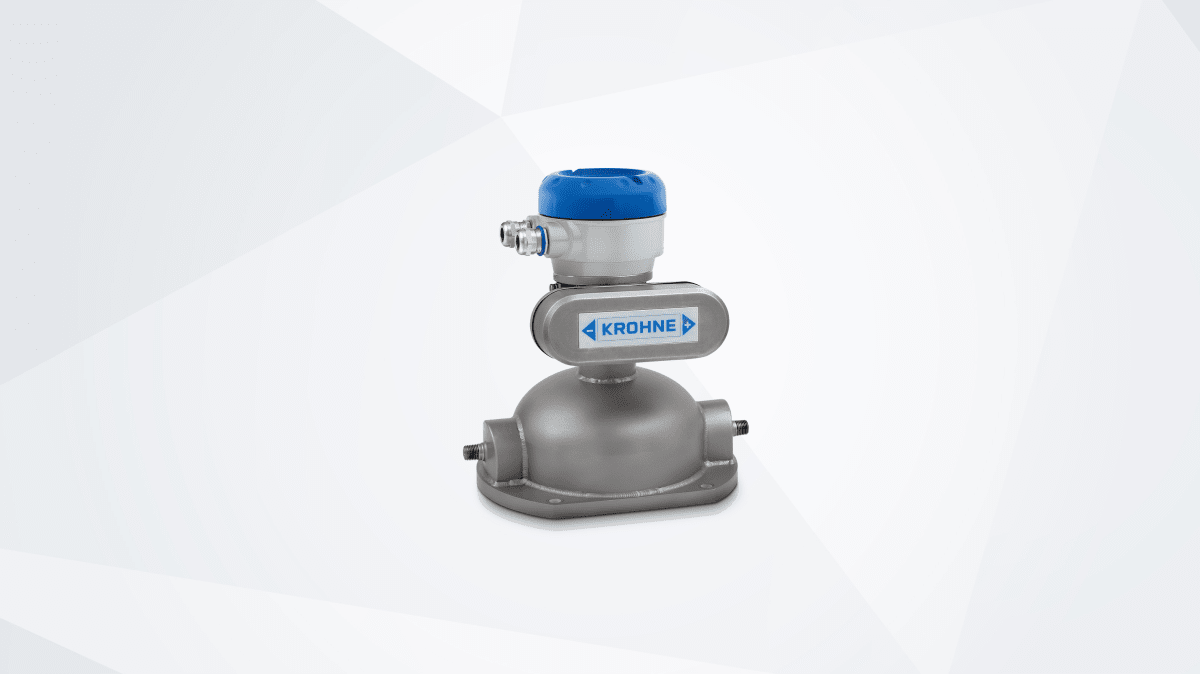
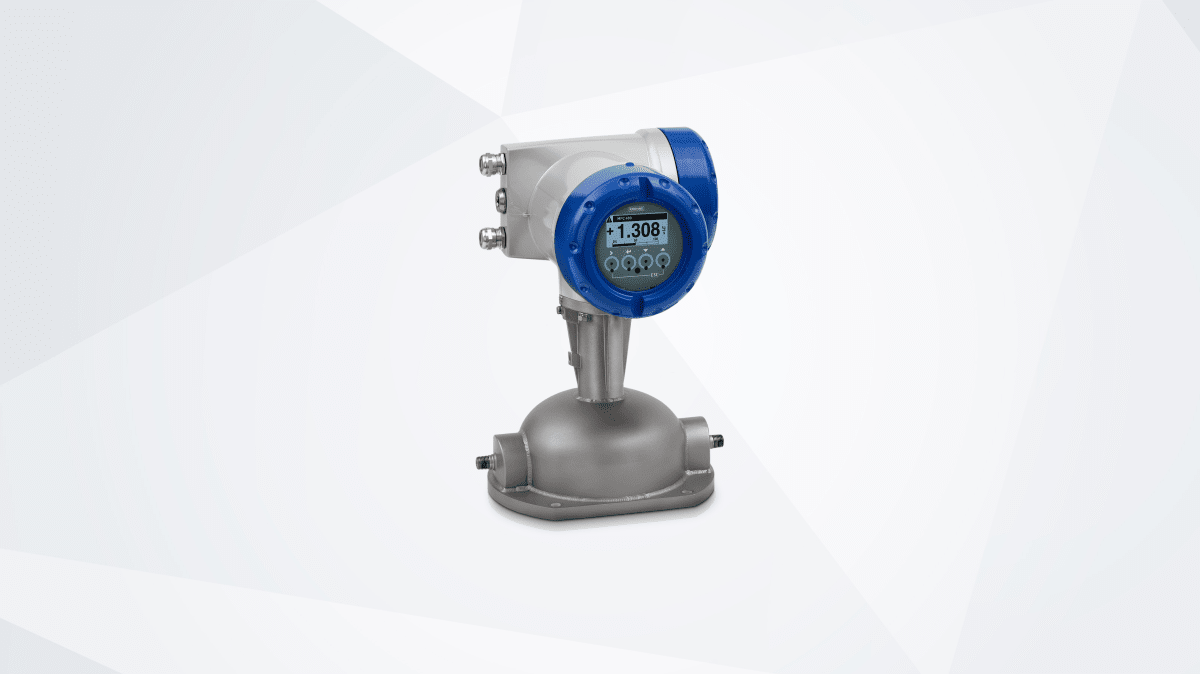
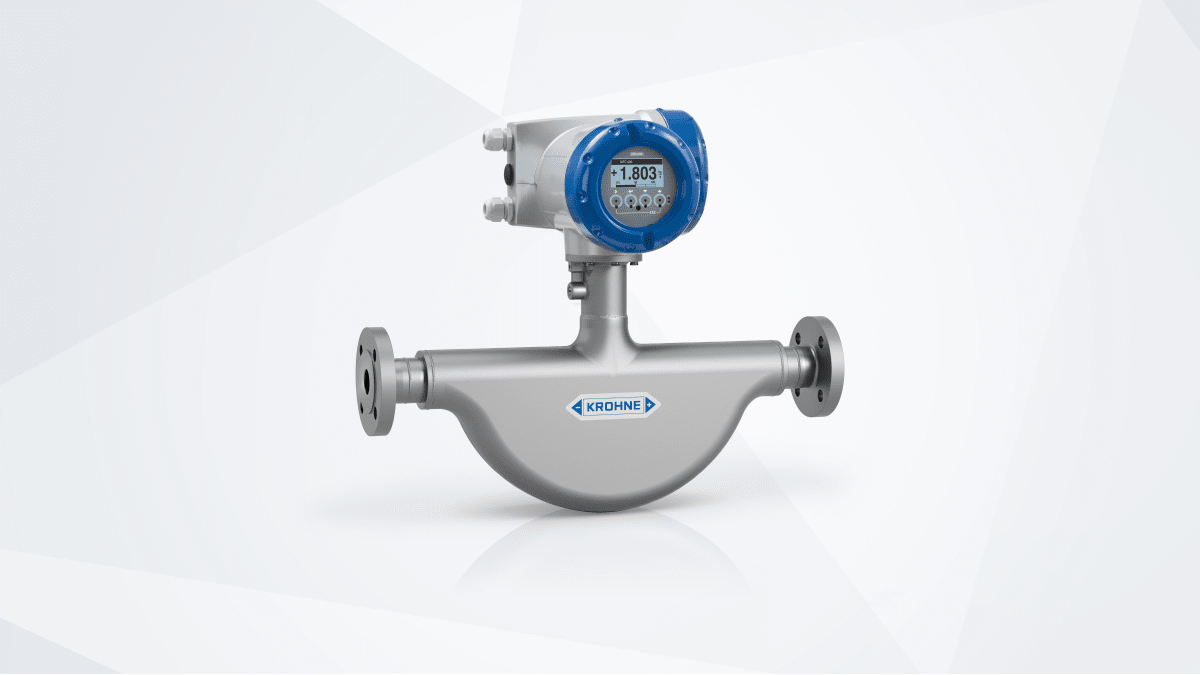
Coriolis flowmeters from our catalogue — for process control, custody transfer, dosing, filling machines and gas dispensing.
Coriolis flowmeters: frequently asked questions
Ask about Coriolis flowmeters
Tell us the fluid, the flow range, the pressure and the temperature, and our engineers will suggest the right meter, with price and delivery time.