FLOW MEASUREMENT TECHNOLOGIES
Electromagnetic flowmeters: measuring conductive liquids with nothing in the flow path
An electromagnetic flowmeter measures the flow of any liquid that conducts electricity — water, wastewater, sludge, slurries, acids and alkalis — through a pipe with nothing inside it: no moving parts, no obstruction and no pressure loss. That is why it is the usual choice for water and wastewater, and a common one in chemical plants, food production and mining.
How an electromagnetic flowmeter works
The principle is Faraday’s law of induction: a conductor moving through a magnetic field develops a voltage across it. In an electromagnetic flowmeter the conductor is the liquid itself. Two coils, one above and one below the measuring tube, create a magnetic field that crosses the pipe at right angles to the flow.
As the liquid flows through the field, a small voltage appears across it, at right angles to both the field and the flow. Two electrodes set into the pipe wall, facing each other, pick it up. The voltage is proportional to the average flow velocity — twice the velocity, twice the voltage (U = k · B · v · D, where B is the field strength and D the inside diameter).
The transmitter multiplies that velocity by the cross-section of the tube to give volume flow. Modern meters switch the field on and off, or reverse it, several times a second; comparing the readings cancels the slow electrochemical voltages that build up on the electrodes, so the zero point stays stable.
Nothing in the measuring tube moves or narrows the flow, so there is no wear and no pressure loss. The reading does not depend on the density, viscosity, temperature or pressure of the liquid; all it needs is a minimum conductivity. It is also less sensitive to the flow profile than most meters that measure velocity — which is why the straight runs it needs are short — and it measures in both directions.
- The conductive liquid flowing through the measuring tube (in the cross-section, into the page)
- Field coils: they create the magnetic field across the pipe
- The magnetic field B, at right angles to the flow
- Electrodes in the pipe wall, on the horizontal axis: they pick up the induced voltage
- Transmitter: turns the voltage into a flow reading
- The voltage U rises in proportion to the flow velocity v
Where an electromagnetic flowmeter fits — and where it does not
A strong choice for
- Water and wastewater: abstraction, treatment plants, distribution networks, irrigation and cooling water
- Sludge, slurries and liquids carrying solids: with nothing in the tube to block, they pass freely
- Acids, alkalis and other corrosive liquids, with liners such as PTFE or PFA and electrodes in resistant materials
- Large pipes: the cost stays reasonable in large sizes, and our catalogue goes up to DN 3000
- Pumping mains and long pipelines, where every bit of pressure loss costs energy
- Hygienic processes — dairy, beverages, filling — with designs approved to EHEDG and 3-A
Think twice when
- The liquid does not conduct electricity: oils, fuels, solvents and demineralised water. Every meter has a minimum conductivity — 5 μS/cm for the OPTIFLUX 1050 and 1300, for example
- You are measuring gas or steam: they do not conduct, so the method cannot work
- The pipe may run partly full: a standard meter needs a full pipe, and partly filled pipes need a special meter such as the TIDALFLUX 2300
- The liquid carries a lot of gas bubbles, or leaves deposits that can coat the electrodes, such as grease or scale — unless the meter and its electrodes are chosen for it
- You need mass flow: an electromagnetic flowmeter measures volume, so mass needs a known density — or a Coriolis flowmeter
- The process is very hot: the liner or the measuring tube sets the limit — +180 °C for the OPTIFLUX 4300 and 5400 in our catalogue, for example
How it compares with the other technologies
- Coriolis±0.1–0.2%
- Electromagnetic (the technology of this article)±0.2–0.5%
- Ultrasonic±0.5–2%
- Differential pressure±0.5–2%
- Variable area±1.6–4% *
- Vortex±0.75–2%
- Thermal mass±1–3%
- Positive displacement±0.2–0.5%
- Turbine±0.5–1%
Typical ranges for liquids (thermal mass: gases), ± % of the reading; for variable area, the accuracy class (*). The accuracy of a specific instrument depends on the model, the size and the installation — we confirm it for your application.
Installing an electromagnetic flowmeter
An electromagnetic flowmeter needs far less straight pipe than most meters that measure velocity. A typical requirement is 5 D upstream and 2 D downstream, counted from the nearest bend, valve or reducer (D = nominal diameter). Some models need even less: the WATERFLUX 3070 and 3400 are specified with 0 D on both sides, while the OPTIFLUX 6400 asks for 2 D downstream.
Above all, the measuring tube must stay full of liquid, and the electrodes must stay wetted and free of gas bubbles and deposits. The position of the meter and the angle of its electrodes are chosen with that in mind — and because the signal is very small, the liquid has to be properly earthed:
- Fit control and shut-off valves after the meter, not before it, so that the tube stays full and the flow reaches the meter undisturbed.
- Do not install the meter on the suction side of a pump, where vacuum can damage the liner; on the discharge side, keep some distance from the pump outlet.
- Choose the size by flow velocity rather than by the pipe: typically around 1–3 m/s. When the flow is low, a meter smaller than the pipe, with reducers on either side, gives a better reading.
- Make sure the gaskets do not protrude into the pipe. For liquids with solids, prefer a vertical line with upward flow: the liner wears evenly and no sediment builds up.
Electromagnetic flowmeters by industry
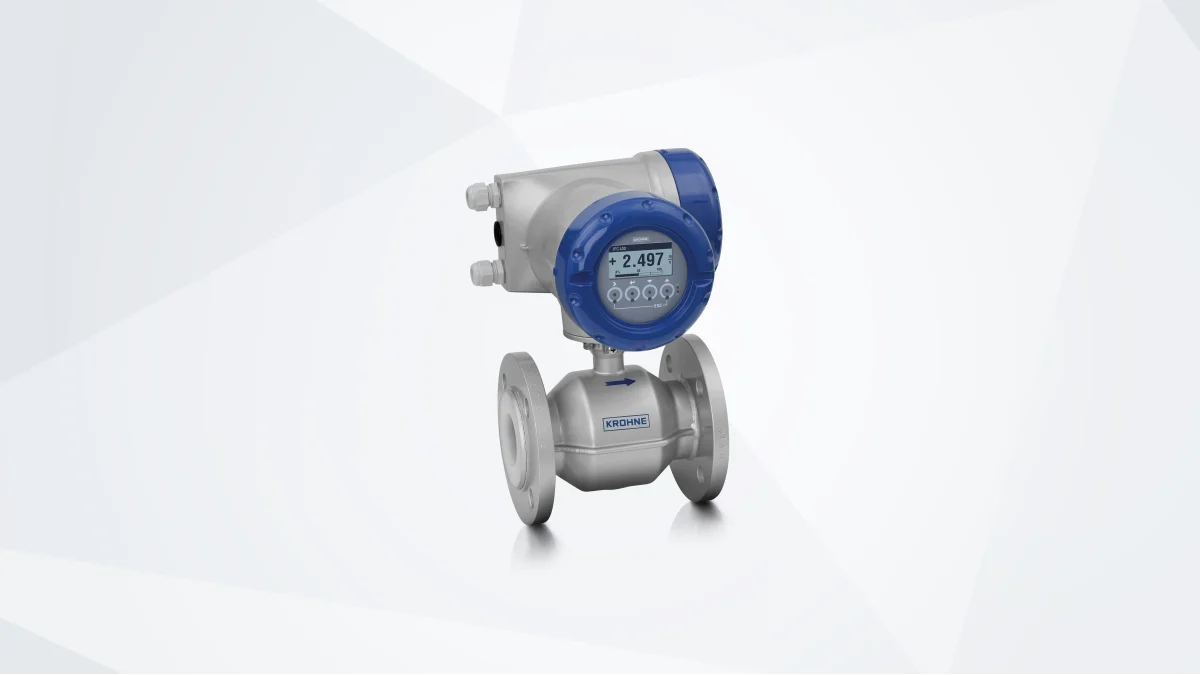
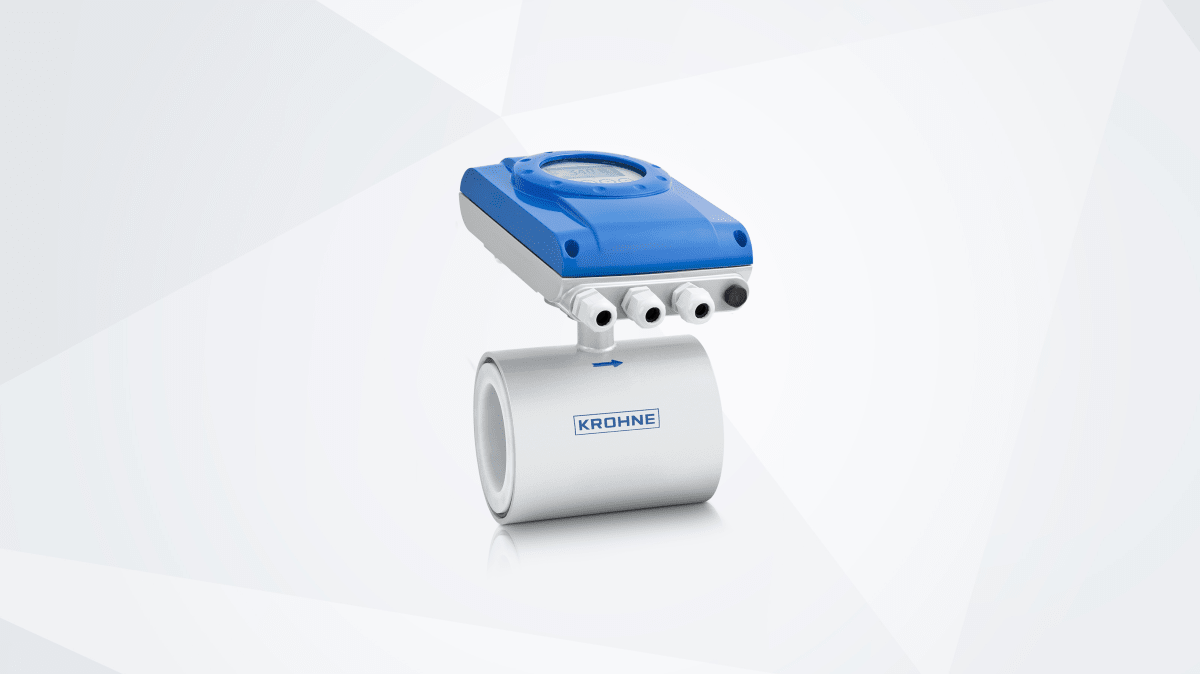
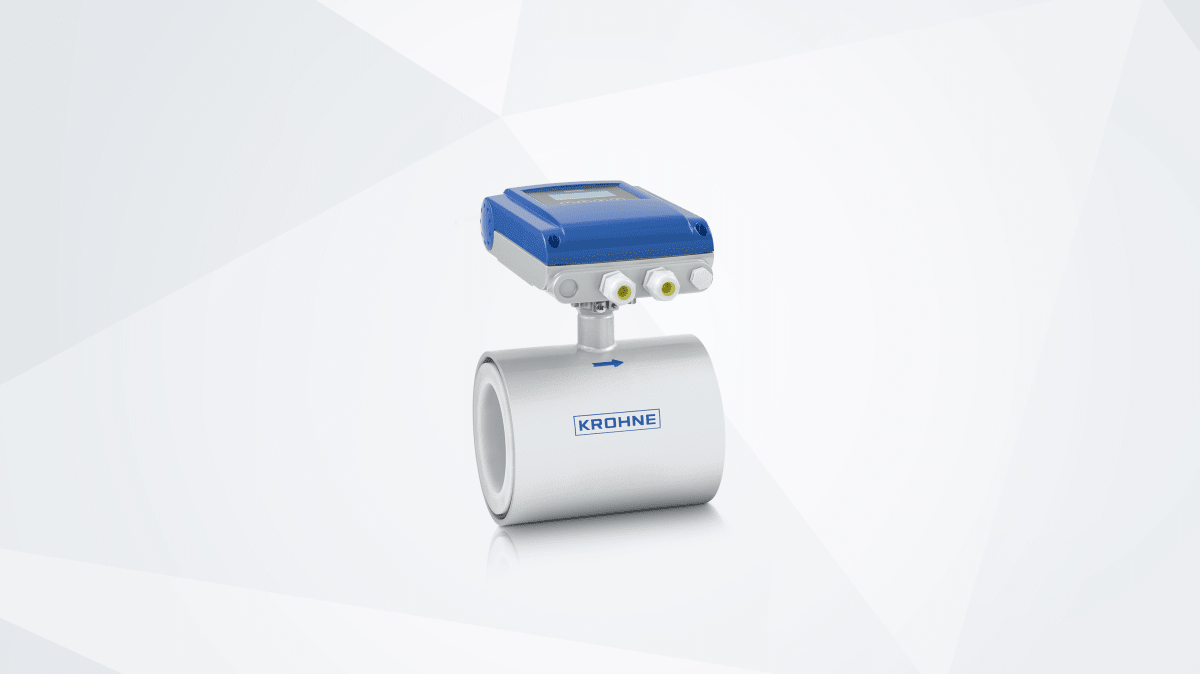
Electromagnetic flowmeters we supply
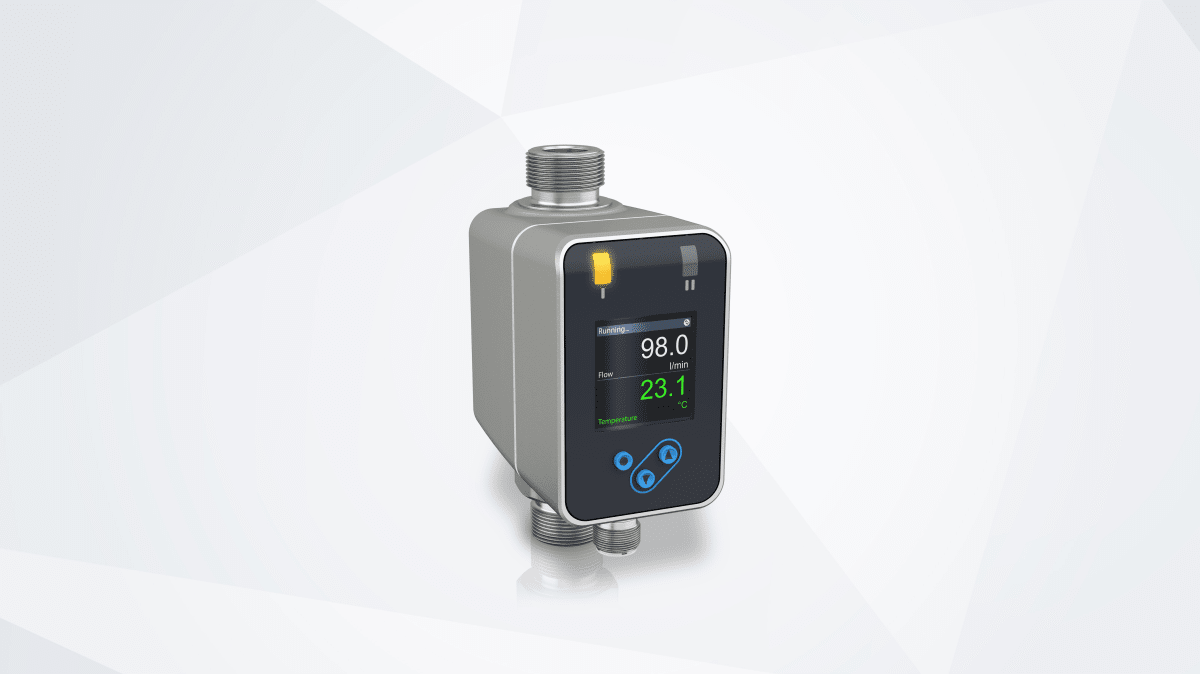
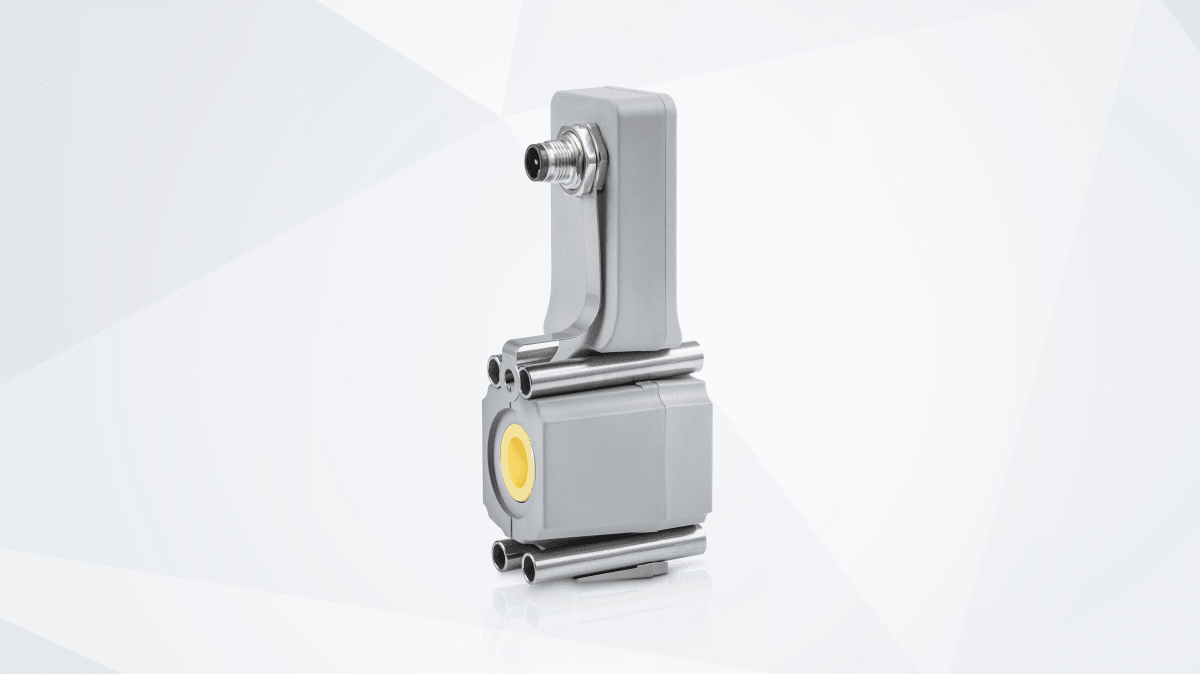
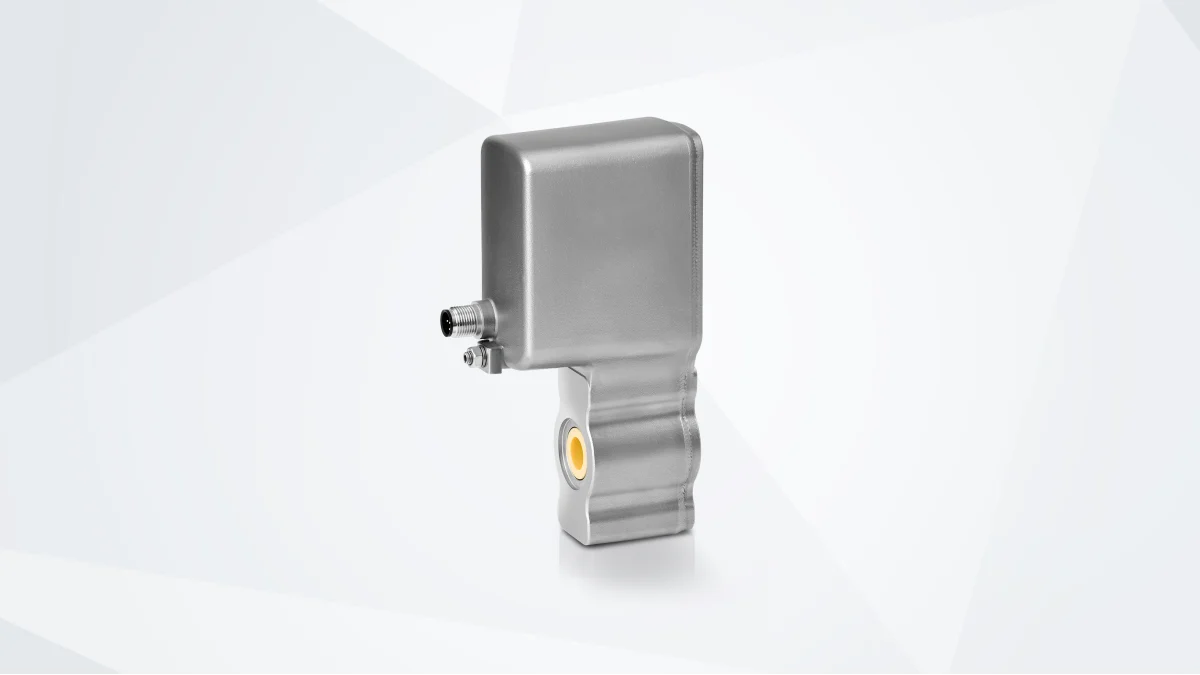
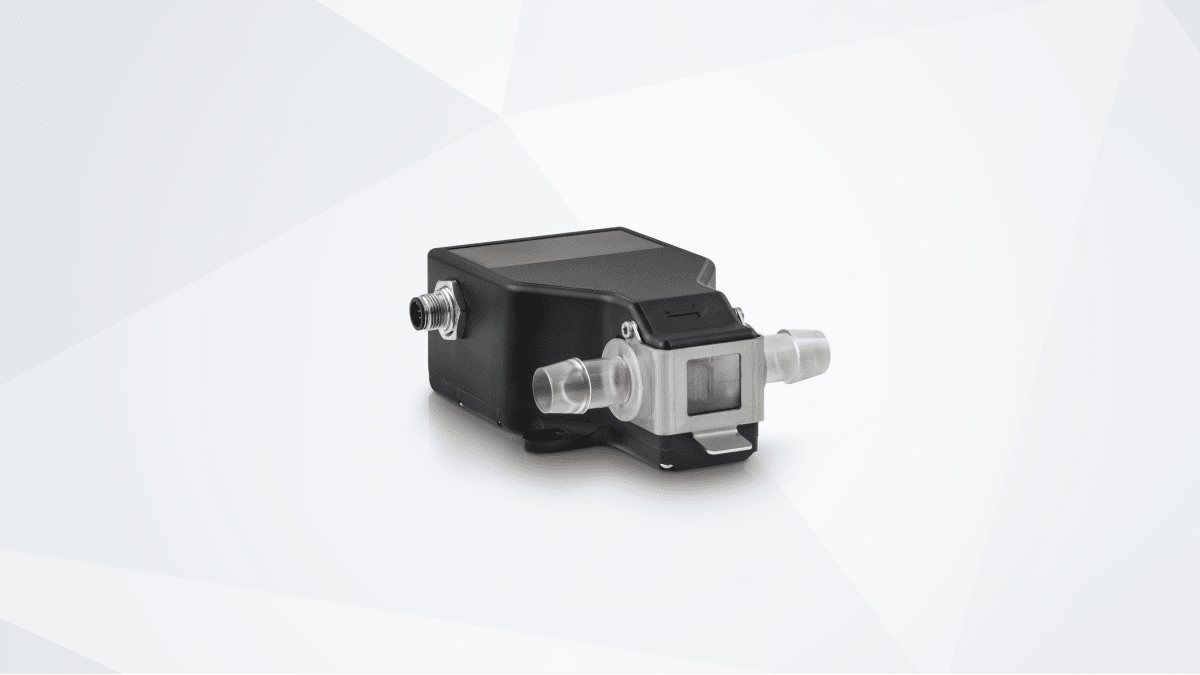
Electromagnetic flowmeters from our catalogue — for water networks, process control, aggressive and abrasive liquids, hygienic processes and filling.
Electromagnetic flowmeters: frequently asked questions
Ask about electromagnetic flowmeters
Tell us the liquid (and its conductivity, if you know it), the pipe size, the flow range, the pressure and the temperature, and our engineers will suggest the right meter, with price and delivery time.