PRESSURE MEASUREMENT TECHNOLOGIES
Pressure transmitters: process pressure as a 4–20 mA signal
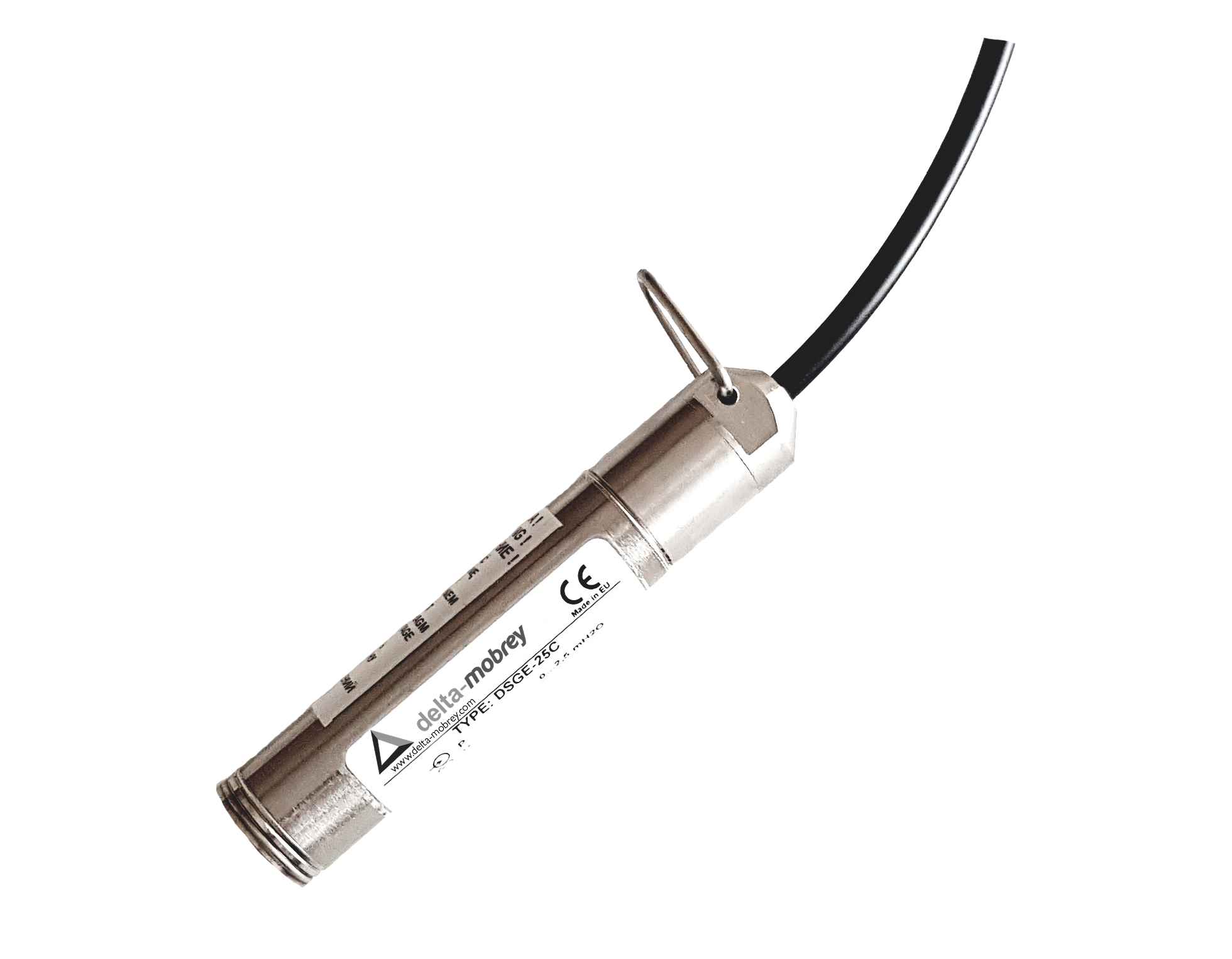
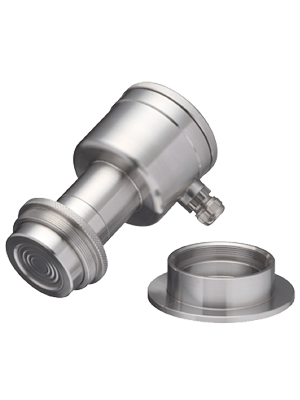
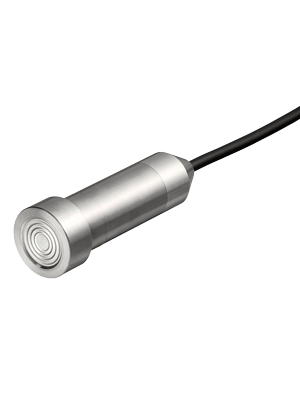
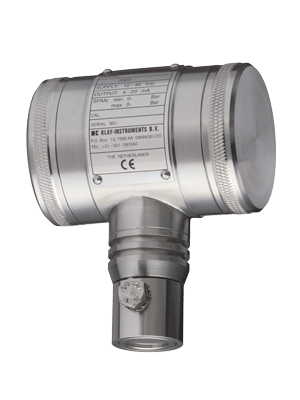
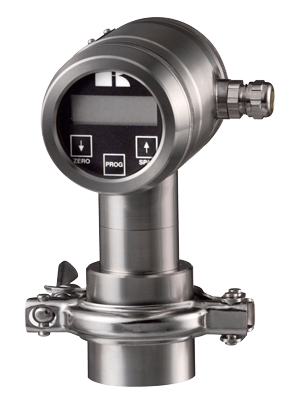
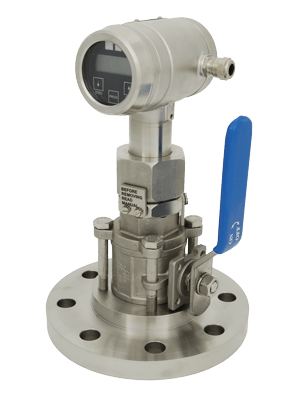
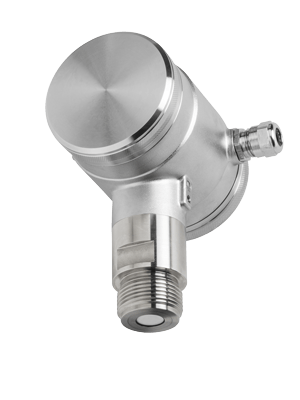
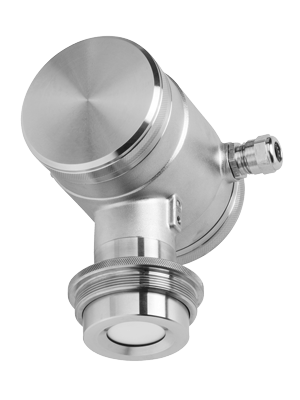
A pressure transmitter measures the pressure at one point and sends it continuously to the control system — the basis of pump control, compressor protection, line and vessel monitoring, and hydrostatic level. Inside, a diaphragm and a sensing element turn the pressure into an electrical signal; the electronics send it as 4–20 mA, often with HART or a fieldbus. Our catalogue includes the Klay Instruments 2000, 3000, 4000 and 8000 series with their hygienic (-SAN) and valve (-VALVE) versions and the CER-2000 and CER-8000, the Delta Mobrey 387, D22 and D23 and the DSGE level probes, and the United Electric TX300.
How a pressure transmitter works
The process pressure acts on a thin diaphragm and deflects it by a tiny amount. A sensing element turns that deflection into an electrical quantity: in a typical design, a silicon chip whose resistance changes as it bends, sitting behind an isolating metal diaphragm with a fill fluid that carries the pressure to it — the construction of the Delta Mobrey D22. Other transmitters use a ceramic sensor that the medium touches directly, such as the Klay 3000 and CER series and the Delta Mobrey DSGE probes, or a metal diaphragm with strain gauges.
Most transmitters measure gauge pressure, against the atmosphere; absolute versions measure against a sealed vacuum and do not change with the weather. The United Electric TX300, for example, is available with gauge and absolute ranges.
The electronics compensate the signal for temperature and send it as a 4–20 mA current over the same two wires that power the transmitter. The 4 mA at the bottom of the range is a “live zero”: a broken wire reads 0 mA and is detected at once. With HART, the control room can also read the range, diagnostics and the process temperature; the Klay 4000 also offers Profibus PA.
The range can be adjusted within limits — the turndown: up to 20:1 on the Klay 4000, 10:1 on the 2000, 4:1 on the 8000. Accuracy is stated as a percentage of the adjusted span: 0.075% on the Klay 4000, 0.1% on the 2000, 0.2% on the 8000.
- The process pressure, pushing on the diaphragm
- The fill fluid, which carries the pressure to the sensing element
- The sensing element (orange chip) and, above it, the electronics
- The 4–20 mA loop to the control system, over the same two wires that power the transmitter
- The signal rises in a straight line with the pressure, from 4 mA at the bottom of the range
Where a pressure transmitter fits — and where it does not
A strong choice for
- Pump and compressor control and protection, line and vessel pressure, with the value in the control system
- Hydrostatic level in open tanks, wells and boreholes — the Delta Mobrey DSGE probes are made for it
- Hygienic processes: the -SAN versions have flush diaphragms and hygienic connections, and the 4000-SAN carries EHEDG and 3-A
- Pulp, slurries and viscous media, with a flush diaphragm that has no port to clog
- Hazardous areas: intrinsically safe Klay 2000, 4000 and 8000 (ATEX and IECEx Ex ia), or the explosion-proof TX300
- Marine and offshore: marine approvals on the Klay 2000, 8000 and CER series, and the all-stainless Delta Mobrey 387
Think twice when
- You need level in a closed or pressurised tank, or the pressure drop across a filter: that is a differential pressure transmitter
- There is no power or wiring and a local reading is enough: a pressure gauge is simpler
- You only need a trip at a limit, independent of the control system: a pressure switch does it with no PLC
- The line has pressure spikes far above the range, such as water hammer, and nothing protects the diaphragm
How it compares with the other technologies
- Pressure transmitters (the technology of this article)25 mbar…2000 bar
- Differential pressure transmitters10 mbar…70 bar *
- Pressure switches10 mbar…400 bar
- Pressure gauges10 mbar…4000 bar
Typical ranges, not a model commitment, on a logarithmic scale. For differential pressure transmitters (*), the range is that of the difference; the static pressure of the line can be much higher. We confirm the figures of each instrument for your application.
Installing a pressure transmitter
Where and how you take the pressure from the process matters as much as the transmitter itself. Keep the impulse line short and sloped, so that it does not trap gas in a liquid line or liquid in a gas line, and fit an isolation valve or a manifold, so that the transmitter can be removed and its zero checked without stopping the process.
Then:
- On steam, keep the hot steam away from the diaphragm with a water-filled line or a siphon.
- Where the pressure pulsates or water hammer occurs, fit a snubber and choose a range with enough overpressure margin.
- Choose the range so that the normal pressure sits in the middle part of it, not at the very end.
- Use screened cable, and in hazardous areas follow the installation conditions of the certificate.
Pressure transmitters by industry
Pressure transmitters in our catalogue
The pressure transmitters in our catalogue, each with its own page and technical data.
Pressure transmitters: frequently asked questions
Ask about a pressure transmitter
Tell us the medium, the pressure range and type (gauge or absolute), the process temperature, the process connection, the accuracy, the output and the area classification — and our engineers will suggest the right transmitter, with price and delivery time.